
The Complete Fly Tying Kit, Built for Your First Season
Most people who search for a fly tying kit are not trying to build a tool collection one purchase at a time — they want to sit at a bench, clamp a hook, and start tying without a shopping list. That is the problem a kit is supposed to solve, and it is worth being specific about what belongs in one, because a lot of “starter kits” on the market are really just a cheap vise with a scissors thrown in.
🚨 Only a few left in stock
Free shipping · 30-day money-back guarantee · Secure checkout
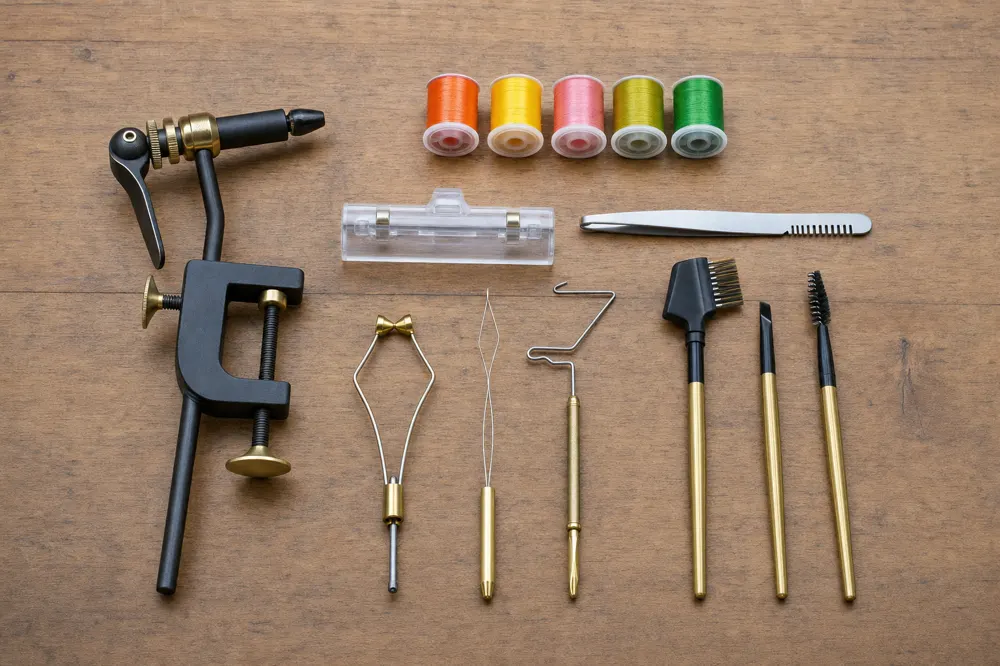
What's actually in the Complete Fly Tying Kit
| Item | Quantity | What it does |
|---|---|---|
| Rotary fly tying vise | 1 | Clamps the hook via a 1.2mm jaw opening (#4–#24) and rotates so you can inspect the fly from every angle without unclamping it. |
| Bobbin holder | 1 | Feeds thread under tension while you wrap it around the hook shank — the tool your hand is on for most of the tie. |
| Whip finisher | 1 | Ties off the final thread wraps into a knot at the head of the fly so it does not unravel. |
| Hackle pliers | 1 | Grips a feather or hackle by its tip so you can wind it evenly around the hook without your fingers slipping. |
| Brushes | Set | Brush out dubbing, deer hair, and other materials to give a fly its final shape and profile. |
| Tweezers | 1 | Places small materials — individual fibers, eyes, small feathers — with more precision than fingers allow. |
| Thread spools | 5 × 100D/220yd | 220 yards per spool across 5 spools is enough thread to tie hundreds of flies before a restock. |
Full vise specifications, with jaw and rotation details, are on the rotary vise page.
Why a beginner should start with a kit, not a vise alone
The most common mistake new tyers make is buying a vise in isolation, assuming a bobbin holder and scissors are “something I probably have already.” Most people don’t. A bobbin holder is a dedicated tool — nothing else in a typical toolbox does its job — and a whip finisher is not something you improvise with your fingers, even though plenty of people try a hand whip-finish and give up on tying within a week because the head knot keeps slipping.
The other reason to start with a kit rather than assembling pieces individually is consistency of scale. A vise, bobbin holder and hackle pliers all interact with the same size hooks and the same thread diameters. When those pieces are chosen together as a kit rather than picked separately from whatever was cheapest at the time, they tend to actually fit the job — the bobbin tube diameter suits the thread, the hackle pliers jaw suits small feathers, and so on.
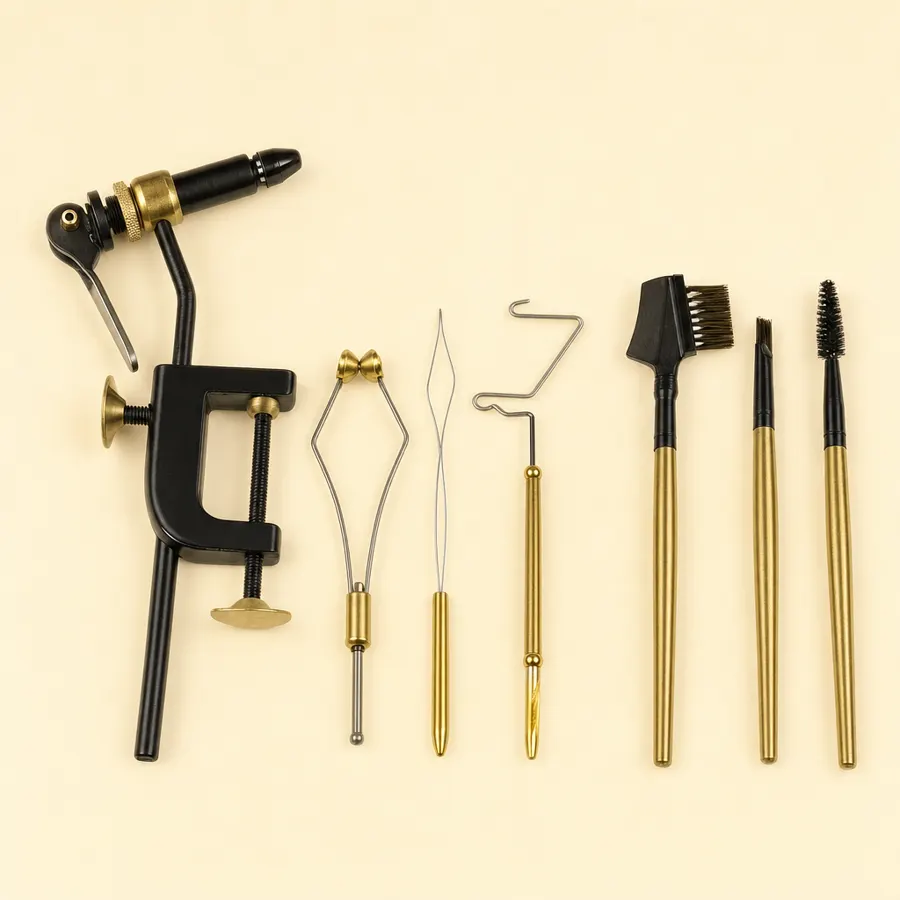
Kit vs. the other two Tailwater options
| Option | Price | Best for |
|---|---|---|
| Fly Tying Vise (solo) | $49.95 | You already own hand tools and thread |
| Complete Fly Tying Kit | $79.95 | First-time tyers who own nothing yet |
| Pro Fly Tying Tool Set | $84.95 | Tiers who want a fuller tool bench setup |
We break this down in more depth, including which patterns each option suits, on our full Tailwater comparison.
By the numbers
Average rating across 47 verified buyers
— Tailwater buyer ratings, 2026
Hook size range the vise jaw accepts
— Tailwater product specifications, 2026
Total vise length, base to jaw tip
— Tailwater product specifications, 2026
What the kit does not include
It is a complete tool kit rather than a tying-materials kit. Any sharp, fine-point craft or embroidery scissors will do the job; you do not need to buy a fly-tying-branded pair for it to work.
Free shipping · 30-day money-back guarantee
Fly tying kit FAQ
What tools do I actually need to start fly tying?
At minimum you need a vise to hold the hook, a bobbin holder to control thread tension, scissors, and something to finish the head knot. A hackle pliers and a bodkin make almost every pattern easier. The Complete Fly Tying Kit covers all of that in one box, so you are not guessing at what to buy first.
Is a cheap fly tying kit good enough for a beginner?
A budget kit is fine as long as the vise holds a hook without slipping and the included tools are usable out of the box, not decorative. Tailwater’s kit uses a hardened-steel rotary vise jaw rather than the soft stamped-metal jaws found in some starter sets, which matters more than any other single part of the kit.
Does the Complete Fly Tying Kit include thread?
Yes. It ships with 5 spools of 100D/220yd thread, enough to tie hundreds of flies before you need to restock. You will still want to add specific colors as you branch into different patterns, but you can tie your first weeks of flies from what is in the box.
Can I upgrade later if I start with the kit?
Yes. The vise in the kit is the same rotary vise sold on its own, so nothing in the kit is a toy version you will need to replace. If you outgrow the included hand tools, the Pro Fly Tying Tool Set adds a fuller lineup around the same vise.
What hook sizes can I tie with this kit?
The vise jaw in the kit accepts hooks from size #4 down to size #24, which covers everything from small dry flies and midges up to streamers and bass bugs. You will not need a second vise for most freshwater fly patterns.
Keep exploring
Want the vise without the extra tools? Read our rotary fly tying vise guide. Already own a vise and want to fill out your bench? See the fly tying tools breakdown. Comparing all three Tailwater options side by side? Go to our best fly tying vise comparison. You can also read 47 verified buyer reviews, browse the Tailwater guides, learn more about Tailwater, or head back to the Fly Tying Vise homepage. Questions before you order? Contact us and we reply within 24 hours.